


Introduction
The future of agriculture is confronted with considerable challenges. As the global population increases at an approximate rate of 1% annually, the demand for food is escalating, especially in urban regions where arable land is limited. Traditional agricultural practices are increasingly acknowledged for their detrimental environmental effects, which include contributions to climate change, deforestation, and soil degradation. Notably, approximately one-third of our arable land has been lost over the past four decades. In response to these pressing issues, innovative solutions such as vertical farming are emerging, offering a more sustainable approach to food production.
What is Vertical Farming?
Vertical farming is defined as the practice of cultivating crops in vertically stacked layers, frequently incorporated into structures such as skyscrapers, warehouses, or greenhouses. This approach enables farmers to increase food production within a reduced spatial footprint, employing advanced technologies to regulate temperature, light, water, and humidity.
Key Features:
- Stacked Layers: The objective is to optimize food production within the constraints of limited land availability.
- Controlled Environment: Effective management strategies are essential to mitigate the risk of crop loss resulting from unfavourable environmental conditions.
- Location Flexibility: The concept can be implemented in urban environments by utilizing spaces such as rooftops and repurposed buildings.

The History of Vertical Farming
While vertical farming may appear to be a contemporary innovation, its origins can be traced back thousands of years. The Hanging Gardens of Babylon, which date back approximately 2,500 years, represent one of the earliest documented instances of this agricultural practice.
- Hydroponic Practices: The Aztecs employed a method known as chinampas, which involved cultivating plants on floating rafts situated over bodies of water.
- Microclimate Cultivation: In the 17th century, French and Dutch agriculturalists implemented innovative practices by cultivating fruits against stone walls, thereby generating warmer microclimates.
Read also : Explore more about farming
How Does Vertical Farming Work?
Vertical farming presents a viable solution to numerous agricultural challenges by maximizing food production throughout the year. There are various models of vertical farming, ranging from compact patio gardens to extensive warehouse operations.
Eden Green Technology Example:
- Hydroponic Systems: The cultivation of crops is conducted in vertically stacked layers within tower-like structures, allowing for optimal exposure to natural sunlight.
- Micro-Climate Creation: Advanced technology ensures the maintenance of optimal conditions for continuous production throughout the year.
- Resource Efficiency: The approach emphasizes minimal utilization of land and water resources, thereby significantly decreasing waste generation.

The Benefits of Vertical Farming
Vertical farming presents a variety of benefits, establishing it as a promising approach for the future of food production.
1. Utilize Less Water and Space
- Resource Efficiency: Vertical farms have the potential to utilize up to 98% less water while achieving yields that are 240 times greater than those of conventional agricultural practices.
- Urban Integration: The implementation of such systems in densely populated regions can effectively address food demand while minimizing the need for extensive land use.
2. Year-Round Production
- Consistent Supply: Unlike conventional agriculture, vertical farming systems are capable of producing a diverse array of crops year-round, irrespective of seasonal fluctuations.
3. Controlled Environment Agriculture (CEA)
- Safety and Health Benefits: CEA (Controlled Environment Agriculture) mitigates occupational hazards, decreases the application of pesticides, and eliminates exposure to detrimental wildlife.
- Food Safety: Controlled environments significantly mitigate the risk of contamination and the incidence of foodborne illnesses.
4. Combatting Food Deserts
- Accessibility: Vertical farms have the potential to flourish in food deserts, thereby supplying fresh produce to underserved urban communities and enhancing access to nutritional resources.
5. Reduced Environmental Impact
- Lower Emissions: The proximity to consumers results in decreased transportation requirements, thereby contributing to a reduced carbon footprint.

Can Vertical Farms Feed the World? The Promise of Vertical Farming
Vertical farming offers a promising approach to addressing various agricultural challenges; however, it should not be regarded as a comprehensive solution. Certain crops may not flourish in vertical environments, and conventional farming methods will continue to hold significance. Nevertheless, vertical farms have the potential to:
- Adapt to Climate Change: By employing Controlled Environment Agriculture (CEA), it is possible to cultivate crops that are adapted to various climatic conditions, thereby ensuring food security in the face of changing environmental circumstances.
- Optimize Space: By employing vertical farming techniques, it is possible to optimize agricultural yields within constrained urban environments, which is essential in light of the increasing global population.
Vertical farming facilitates the cultivation of plants in vertically stacked layers, thereby enabling food production in locations where conventional agriculture may be unfeasible, including megacities, arid deserts, and areas characterized by extreme climatic conditions.
“Dr. Elias Kaiser, a prominent researcher, asserts that of vertical farming is the ability to cultivate healthy food in proximity to consumers. he emphasizes that the high costs associated with electricity for lighting pose a considerable obstacle to the widespread implementation of this agricultural method.”
Innovative Approaches to Sustainable Agriculture
Vertical farming has the potential to transform food production in urban and extreme environments by optimizing plant growth through dynamic environmental control, particularly through the implementation of smart lighting systems that adjust according to electricity costs and the specific needs of the plants. Researchers highlight the capacity of these systems to improve food quality and sustainability while simultaneously reducing energy consumption.
Dr. Elias Kaiser, the primary author of the article published in Frontiers in Science, stated, of vertical farming systems is their ability to produce healthy food in proximity to consumers in locations where traditional agriculture is unfeasible, such as mega-cities, arid regions, and areas that experience prolonged periods of cold and darkness throughout the year. the expenses related to electricity consumption.
Dynamic Environmental Control Systems May Revolutionize Vertical Farming Practices
Dynamic environmental control has the potential to revolutionize vertical farming systems by modulating light and other environmental parameters to meet the specific needs of individual crops. This approach not only fosters enhanced growth but also reduces energy expenditures.
by plants on both diurnal and developmental timescales. These patterns necessitate regular adjustments to their growing environment to optimize growth, Leo Marcelis of Wageningen University, the senior author.
Current vertical farming systems frequently operate under fixed environmental conditions, resulting in substantial energy consumption. Recent studies indicate that implementing dynamic environmental control—where conditions are adjusted according to the specific requirements of the plants—has the potential to markedly improve system efficiency.
Professor Leo Marcelis from Wageningen University highlights that the application of plant physiology knowledge in conjunction with innovative sensing technologies can enhance optimal growth conditions.
Harnessing Technology for Plant Growth
The biological functions of plants are significantly affected by environmental factors such as temperature, light wavelengths, and carbon dioxide concentration. Consequently, the manipulation of these environmental conditions enables vertical farming systems to optimize plant growth. Lighting serves as a crucial variable, as all plants require it for the process of photosynthesis, and varying light wavelengths can have distinct effects on different plant species. Additionally, variations in electricity prices can be strategically leveraged to minimize energy expenditures.
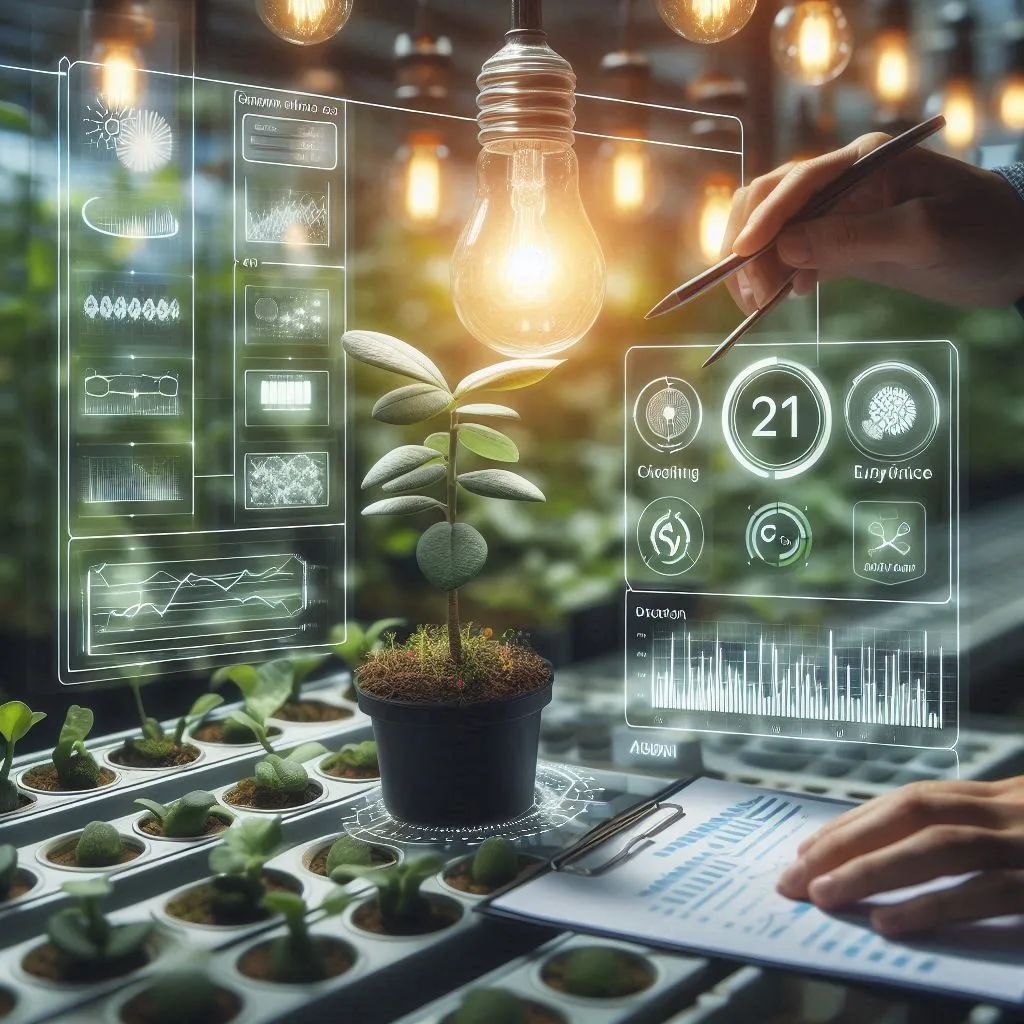
The authors of a recent study developed a model for evaluating smart lighting systems designed to maintain a consistent rate of photosynthesis in plants throughout the day while simultaneously reducing electricity expenses. Their findings indicate that an optimization algorithm can achieve a 12% reduction in electricity costs without adversely affecting carbon fixation, achieved through the modulation of light intensity.
Lighting plays a crucial role in plant growth, as it directly influences the process of photosynthesis. Different plant species exhibit distinct responses to varying wavelengths of light. Furthermore, optimizing lighting conditions in accordance with real-time electricity pricing can result in significant cost savings.
The research team formulated a model to evaluate smart lighting strategies that ensure consistent photosynthesis while simultaneously reducing costs. Their findings indicated that:
- Optimization Algorithm: The implementation of this measure results in a 12% reduction in electricity expenses.
- No Negative Impact on Growth: The varying intensity of light did not adversely affect leafy greens such as spinach, even when subjected to less predictable patterns.
Preparing for the Future of Farming
As vertical farming technology continues to advance, it is imperative to address several critical issues.
- Scalability of Solutions: Numerous proposed solutions have not yet undergone testing at the larger scales that vertical farms entail.
- Dynamic Adjustments: Adjusting airflow rates, temperature, and carbon dioxide levels in accordance with the specific requirements of plants can lead to a reduction in operational costs.
- Sensors and New Cultivars: Farmers will require appropriate sensors and models to effectively monitor environmental conditions and assess new cultivars developed for vertical farming.
“In a vertical farm, all growth conditions can be precisely regulated,” stated Marcelis. “Nevertheless, the mere technical capability to maintain these conditions consistently does not necessarily imply that it represents the optimal solution. Once dynamic environmental control is implemented, both energy consumption and operational costs can be significantly diminished, thereby enhancing the profitability and sustainability of vertical farming systems.”
Despite these advancements, challenges persist. Numerous proposed solutions have not yet been evaluated on scales that are characteristic of vertical farming systems.
Kaiser cautions that although specific strategies may prove effective at the individual plant level, their efficacy at the crop stand level requires further validation.
The implementation of dynamic adjustments in airflow, temperature, and carbon dioxide (CO₂) levels, tailored to real-time requirements, has the potential to significantly improve efficiency. This necessitates:
- Sophisticated Sensors: The purpose of this process is to monitor and adjust conditions.
- New Cultivars: This organism has been specifically cultivated for optimal performance in vertical farming environments.
“In a vertical farm, all growth conditions can be precisely regulated. However, maintaining these conditions at a constant level may not necessarily represent the optimal approach.” Marcelis states.

The Future of Indoor Vertical Farming
As agricultural technology (AgTech) continues to progress, vertical farming is anticipated to become increasingly prevalent and sophisticated. Potential innovations may encompass:
- Robotic Monitoring and Harvesting
- AI-Powered CEA Systems
The continuous advancements in vertical farming have the potential to profoundly influence the future of food production by promoting sustainable and efficient agricultural practices.
Discover More with Eden Green Technology
Eden Green Technology enhances the practice of vertical farming by providing customized solutions for grocery retailers and store brands. With an emphasis on private label offerings and a dedication to sustainability, the company positions itself as a leader in agricultural innovation.
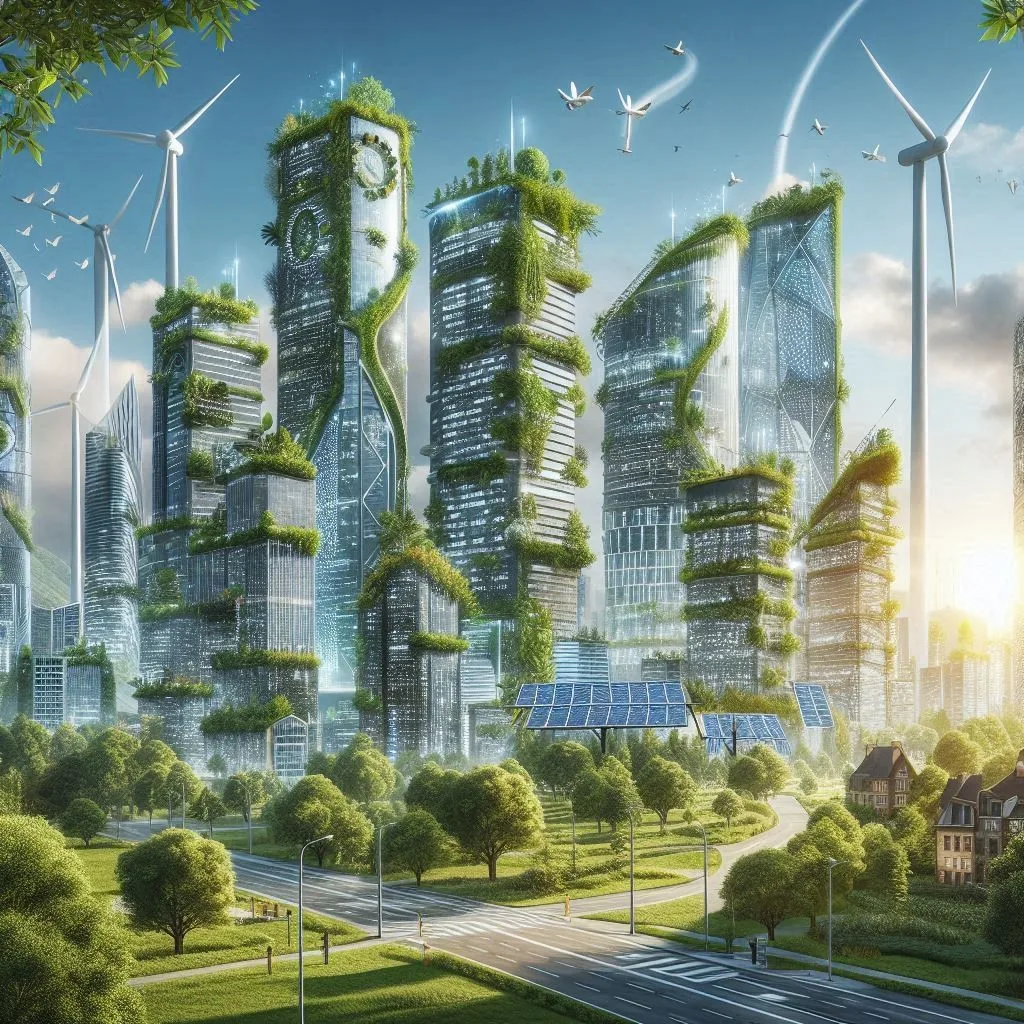
We invite you to participate in the advancement of sustainable agriculture. Vertical farming has the potential to generate fresh produce within urban settings, thereby minimizing transportation-related emissions.
As the global population continues to increase, the challenge of ensuring food security in urban and extreme environments has become increasingly urgent. Vertical farming, an innovative approach to indoor crop cultivation, is emerging as a transformative solution to this issue. By optimizing plant growth through advanced environmental controls, particularly the implementation of smart lighting systems, researchers are harnessing the potential for more sustainable and efficient food production.
Conclusion
As urbanization intensifies and the challenges posed by climate change become increasingly severe, vertical farming presents a viable solution for sustainable food production. By adopting innovative strategies such as dynamic environmental control and intelligent lighting systems, it is possible to optimize resource utilization, improve food quality, and decrease energy expenditures.
The future of vertical farming presents significant potential for addressing urban food supply challenges while simultaneously promoting environmental sustainability. Consequently, it represents a vital domain for continued research and exploration.
Vertical farming represents a groundbreaking methodology that has the potential to transform food production by tackling critical challenges such as land scarcity, environmental sustainability, and food security. As we progress, the adoption of technologies such as vertical farming will be essential in meeting the nutritional needs of the increasing global population while simultaneously safeguarding the health of our planet.








Wow never thought 💭 of this. Thank you for sharing.
Wow concept 🤞